Trane Furnace Flashing 8 Times in Santa Clarita: Low Flame Sense
Plainly put: A Trane furnace 8 flashes in Santa Clarita, CA (ZIP 91354) is a low flame-sense signal: the flame rod reads too little microamp current because it is dirty, weak, or poorly grounded. Call (213) 755-2539 or book online and a Trane tech meters and restores it.
What to know
- 8 flashes = low flame-sense microamp signal; the burner lights but the board barely "sees" the flame.
- Top cause here: a flame rod fouled by dry valley dust; second, a loose burner ground.
- Healthy flame-sense current is usually 2 - 6 microamps; an 8-flash unit reads below the board's threshold.
- Components in play: flame sensor, sensor wiring, burner ground.
- Typical fix $150 - $350 to clean or replace the sensor and tighten the ground.
- Left alone it escalates to a 2-flash no-heat lockout. Coverage ZIPs 91350-91390.
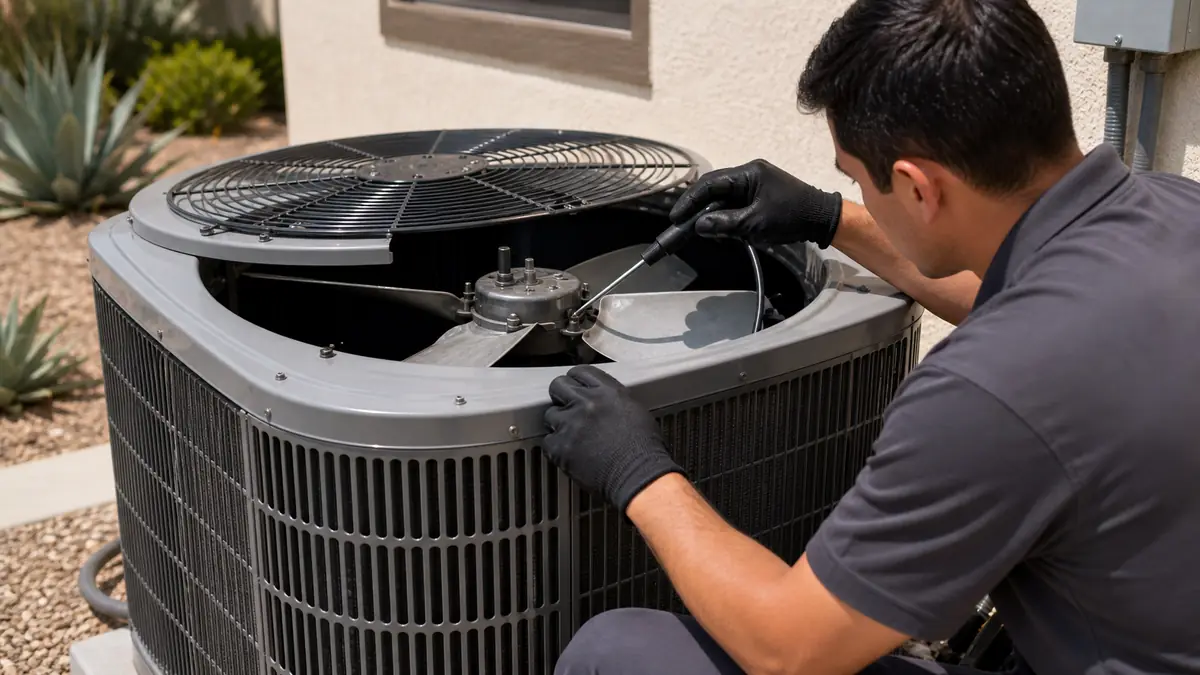
What is a low flame-sense signal on a Trane?
To prove a real flame, a Trane furnace runs a tiny electrical trick called flame rectification. A metal rod sits in the burner flame, the board sends an AC voltage down it, and the flame itself acts as a one-way conductor, rectifying that signal into a small DC current the board can measure, typically a few microamps. A clean, well-grounded rod in a strong flame returns a healthy reading. When that current drops below the board's threshold, it cannot confidently say the burner is lit, so it raises the 8-flash low-flame-sense code as a warning. The burner is usually still firing at this stage; the board just no longer trusts what it is reading. That makes 8 flashes the polite early warning before the furnace gives up and throws a 2-flash lockout. The fix is almost always restoring conductivity at the rod, not replacing electronics, which is why this is the least expensive of the common Trane furnace codes.
Why does the flame sensor foul so fast in Santa Clarita?
Climate and dust drive this code in the Santa Clarita Valley. Sitting above the basin in Title-24 Climate Zone 9 with a high-desert lean, the valley runs dry, and the Santa Ana winds push fine hillside grit into homes across Canyon Country, Saugus, and the open edges of Valencia. That grit, plus normal combustion byproducts, bakes onto the hot flame rod as a thin insulating film of silica and oxide. The film is invisible but it chokes the microamp signal, so the board sees less and less flame current until it crosses the 8-flash threshold. Homes near open space and new-construction infill, where landscaping has not yet matured, see the heaviest dust load and the fastest fouling. The housing stock plays a part too: in the tight upstairs furnace closets of master-planned tracts, a furnace pulling combustion and dilution air from a dusty platform fouls its rod faster than one in a clean basement, which Santa Clarita homes rarely have. The pattern is so consistent that an 8-flash code in this valley is usually a maintenance signal, not a failure.
How do you diagnose 8 flashes with instruments?
The microamp meter does the talking. We do not just clean and hope; we measure before and after so we know the fix actually moved the reading into a safe range:
- Confirm the count: watch two full blink cycles through the door window to be sure it is 8 flashes, not 2 or 3.
- Baseline the signal: put a microamp meter in series with the flame-sensor wire and fire the burner. We expect a healthy 2 to 6 microamps; an 8-flash unit reads well under the board's minimum, often under 1.
- Inspect the rod: pull and examine the flame sensor for the tell-tale white or brown film, and check the ceramic insulator for cracks that would also drop the signal.
- Clean and re-meter: clean the rod with a non-abrasive pad, reinstall, and re-read the microamps. A reading that jumps back into range confirms fouling was the cause.
- Check the ground: a weak burner-to-cabinet ground starves the rectification circuit, so we verify the ground strap and burner grounding, since a clean rod with a bad ground still reads low.
- Replace if needed: if cleaning does not recover the signal, the rod is worn or cracked and gets replaced, then we re-meter to confirm a stable reading before we leave.
What can I safely check, and what should I leave alone?
The safe homeowner steps are limited here, because the flame sensor lives next to a live gas burner. You can replace a dirty air filter and confirm the furnace is otherwise lighting, and you can note the pattern, whether it runs then trips or warns intermittently, which helps the tech. That is the safe list. Do not pull and scrub the flame rod yourself: it is brittle ceramic, over-scrubbing wears it out, bending it changes its position in the flame, and reaching into the burner box near the gas valve is not a homeowner job. Sandpaper or a wire brush, which the internet loves to suggest, scratches the rod and shortens its life. Most importantly, do not keep force-resetting an 8-flash that has tipped into a lockout; that risks the same delayed-ignition and unburned-gas problems any furnace lockout warns against. When the signal is low, the right move is to book a tech who can meter it. Call (213) 755-2539 or schedule online.
What does it cost, and how urgent is 8 flashes?
This is the friendliest of the common Trane codes on the wallet. A clean-and-re-meter visit, including tightening the burner ground, runs $150 to $350 in the Santa Clarita Valley, and a flame-sensor replacement sits in that same band because the part itself is inexpensive; the labor and the verified microamp reading are what you are paying for. The $79 to $200 diagnostic is usually credited toward the work. On urgency, 8 flashes is a yellow light, not a red one: the furnace is typically still heating, so it is not an emergency, but it is degrading. Ignore it through a Saugus winter and the rod keeps fouling until the signal collapses and the board escalates to a 2-flash no-heat lockout, almost always on the coldest morning. The smart play is to fix it while it is still just a warning, and to fold a flame-sensor clean into an annual fall tune-up so it does not recur. See the related Trane 2-flashes lockout page it leads to, the full Trane error-code guide, and our furnace repair service for the visit itself.
Common questions
What does 8 flashes mean on a Trane furnace?
Eight flashes is a low flame-sense signal: the burner lights, but the flame rod reads too little microamp current for the board to trust the flame, so it flags the weak signal. The cause is almost always a dirty or oxidized flame sensor or a poor burner ground, not a serious failure. It is the cheapest of the common Trane furnace codes to fix.
Can I clean a Trane flame sensor myself?
We do not recommend it. The rod is fragile ceramic, it sits inches from a live burner and the gas valve, and over-scrubbing or bending it during cleaning is a common way homeowners turn a $150 fix into a $300 replacement. A tech cleans it with the right non-abrasive pad, re-checks the microamp reading, and confirms the ground in a few minutes.
Will an 8-flash Trane keep heating my Santa Clarita home?
Sometimes, for a while. A borderline flame signal may still let the furnace run, but as the rod gets dirtier the reading drops until the board can no longer prove flame and escalates to a 2-flash lockout, leaving you with no heat. Catching the 8-flash early in a Saugus winter avoids the cold-morning no-heat call later.
Why does my Trane flame sensor foul so fast in Canyon Country?
Dry, dusty Santa Clarita Valley air carries fine grit that the Santa Ana winds drive indoors, and it bakes onto the hot flame rod as an insulating film. Homes near open hillside in Canyon Country and Saugus see it fastest. That is why we often find an 8-flash code is just a maintenance issue, and why an annual fall clean prevents it.
Last updated 2026-06-13.