Air Duct Repair and Sealing in Santa Clarita
Plainly put: Santa Clarita Trane HVAC repairs, seals, and replaces air ducts across Santa Clarita, including Valencia (91354) and the two-story Tesoro del Valle tracts, with HERS field verification on qualifying jobs running about $1,900 to $6,000. Call (213) 755-2539 or book online. We chase weak upstairs airflow, leaky attic runs, and undersized returns that no condenser swap alone can fix.
What to know
- Typical duct repair / replacement: $1,900 - $6,000; smaller seal-and-balance jobs lower.
- Attic summer temps near 140 F make duct leakage a real comfort and bill problem here.
- HERS field verification of duct leakage handled via a certified rater.
- Common fix: sealing runs and correcting undersized returns in two-story tracts.
- Coverage: Valencia, Tesoro del Valle, Saugus, Canyon Country, Newhall, ZIPs 91350-91390.
- Independent; we pair duct work with right-sized Trane installs.
Why do Santa Clarita ducts cost you comfort?
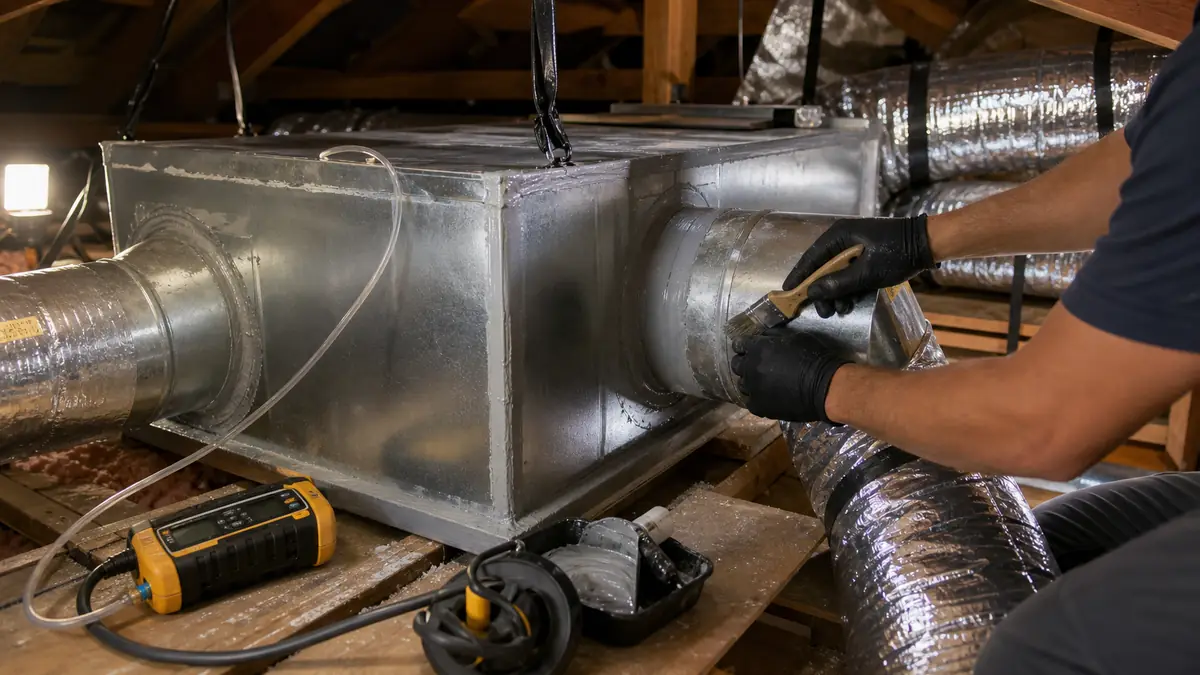
Most of the valley's production homes run their supply and return ducts through the attic, where summer temperatures push toward 140 F. Every joint that leaks is dumping cooled air into that oven before it reaches a bedroom. On two-story Valencia and Tesoro del Valle homes the upstairs suffers most, because the longest, leakiest runs feed the rooms that are already hottest. A bigger condenser does not fix a leaky duct system; it just burns more power feeding the leaks.
| Symptom | Likely cause / first check | Cost lane |
|---|---|---|
| Upstairs hot, downstairs fine | Leaky attic runs, undersized return | $1,900 - $4,500 |
| Weak airflow at the farthest registers | Crushed flex duct or disconnected run | $400 - $1,500 |
| High bills with a healthy condenser | System-wide duct leakage | $1,900 - $6,000 |
| Dust and uneven rooms after a changeout | Return imbalance / static pressure too high | $500 - $2,500 |
| Whistling registers, loud blower | Excessive static pressure, undersized trunk or return | $600 - $2,800 |
| Furnace four-flash high-limit on low airflow | Restricted return or collapsed run starving the coil | $400 - $2,500 |
How does a duct repair visit actually go?
We work the system, not a single register. First we measure: a static-pressure read across the air handler and coil tells us whether the system is fighting too much resistance, and a room-by-room temperature and airflow check finds the starved rooms. Next we go into the attic and trace the runs, looking for disconnected boots, crushed or kinked flex, torn inner liner, and gaps at plenum and takeoff joints, the leak points that bleed cooled air into a 140 F attic. Then we seal: mastic and mesh on hard connections, proper strapping and support so flex is not sagging and pinched, and we re-seat any boots that pulled loose at the ceiling. Where a return is undersized, which is the rule rather than the exception on these tracts, we add or enlarge return area to drop static and let the blower breathe. Finally, on any job large enough to trigger Title-24, a certified HERS rater runs a duct-leakage test, usually with a duct blaster, and certifies the leakage rate to the registry. We document the before-and-after static and the certificate for your records.
What kind of duct do you install or repair?
Santa Clarita's production homes are almost all insulated flex duct run through the attic off a sheet-metal or ductboard plenum, with the trunk and branch sizing set by whatever the original builder used. The common failures are predictable: R-4.2 or R-6 flex that has sagged and torn over twenty-plus years, undersized returns that were value-engineered down at construction, and long branch runs to the upstairs bedrooms that lose pressure and temperature before they arrive. For repairs we seal and re-support the existing flex and rebuild boots and takeoffs. For replacement we run new R-8 insulated flex (a meaningful upgrade in a hot attic), resize the return and trunk to the real airflow the system needs, and seal every joint with mastic rather than tape, which dries out and lets go in attic heat. We match the duct design to the Trane equipment's rated airflow, typically around 350 to 400 CFM per ton, so the system is not choked.
What does duct work cost in Santa Clarita, and why?
A full duct repair or replacement here typically runs $1,900 to $6,000, with smaller seal-and-balance jobs lower. The price drivers are scope and access. A targeted seal-and-support of a leaky attic system with a return correction sits at the lower band. A full replacement of all the flex, plenum work, and resized returns on a two-story home reaches the high end, and complex two-story routing or a tight attic with poor access adds labor. The HERS field verification is its own line where the job is large enough to require it. The payoff math is real here: a leaky duct system in a 140 F attic can lose a quarter or more of its conditioned air, so sealing often beats upsizing the condenser, which would only burn more power feeding the same leaks. We evaluate the ducts and the equipment together so you are not paying for tonnage to cover a leak.
How does duct sealing connect to my Trane system?
Directly. High duct leakage and undersized returns raise external static pressure, which is the load an ECM blower fights against. On a variable-speed XV20i or a furnace with a variable-speed ECM blower, excessive static can trip the four-flash high-limit on a furnace or push the blower to run hard and loud. Sealing the ducts lets the Trane equipment reach its rated airflow, which is also exactly what the Title-24 airflow verification checks for on a new install. See our AC installation page for how sizing and ducts work together.
What does HERS verification involve?
Once a duct alteration or replacement is large enough, Title-24 in Climate Zone 9 requires HERS field verification of duct leakage. An independent certified rater tests the duct system, usually with a duct blaster, and certifies the leakage rate to the registry. We handle the sealing and replacement, then bring in the rater so the result is on record. That certificate counts at resale and for permit closeout. Our sizing guide explains how duct condition feeds the load calc.
Common questions
Why is my upstairs so much hotter than downstairs in Valencia?
Two-story Santa Clarita tract homes commonly have undersized returns and long, leaky attic duct runs that lose cooled air before it reaches the upstairs registers. In a 140 F summer attic, leaks dump money into the rafters. Sealing the runs and correcting the return often closes the temperature gap more cheaply than upsizing the AC.
Does duct work in Santa Clarita need HERS testing?
Most of the time. Alter or replace a meaningful stretch of duct in Climate Zone 9 and Title-24 calls for HERS field verification of duct leakage. A certified rater tests the system and certifies the outcome. We line up that rater so the job clears and the certificate stays on file for resale.
Can sealing ducts let me install a smaller, cheaper AC?
Sometimes. Leaky ducts inflate the apparent load and steer people toward oversized condensers. Sealing the duct system and correcting the returns can bring the Manual J result down, which opens the door to a right-sized, cheaper unit that runs longer and dehumidifies better. We evaluate the two together.
Is duct cleaning the same as duct sealing?
No. Cleaning removes dust from the inside of the ducts; sealing closes the leaks that waste cooled air and pull attic dust into the system in the first place. In Santa Clarita's leaky-attic-duct housing stock, sealing and correcting returns fixes the comfort and bill problem, while cleaning alone does not. We focus on sealing, support, and return sizing.
Why is my new Trane system loud or whistling at the vents?
Usually excessive static pressure from an undersized return or a too-small trunk, not the equipment. A variable-speed ECM blower will push hard against that resistance and get loud, and high static can even trip a furnace four-flash high-limit. Enlarging the return and easing the duct restriction quiets it and lets the system reach its rated airflow.
Last updated 2026-06-13.